

Last updated: October 25, 2026
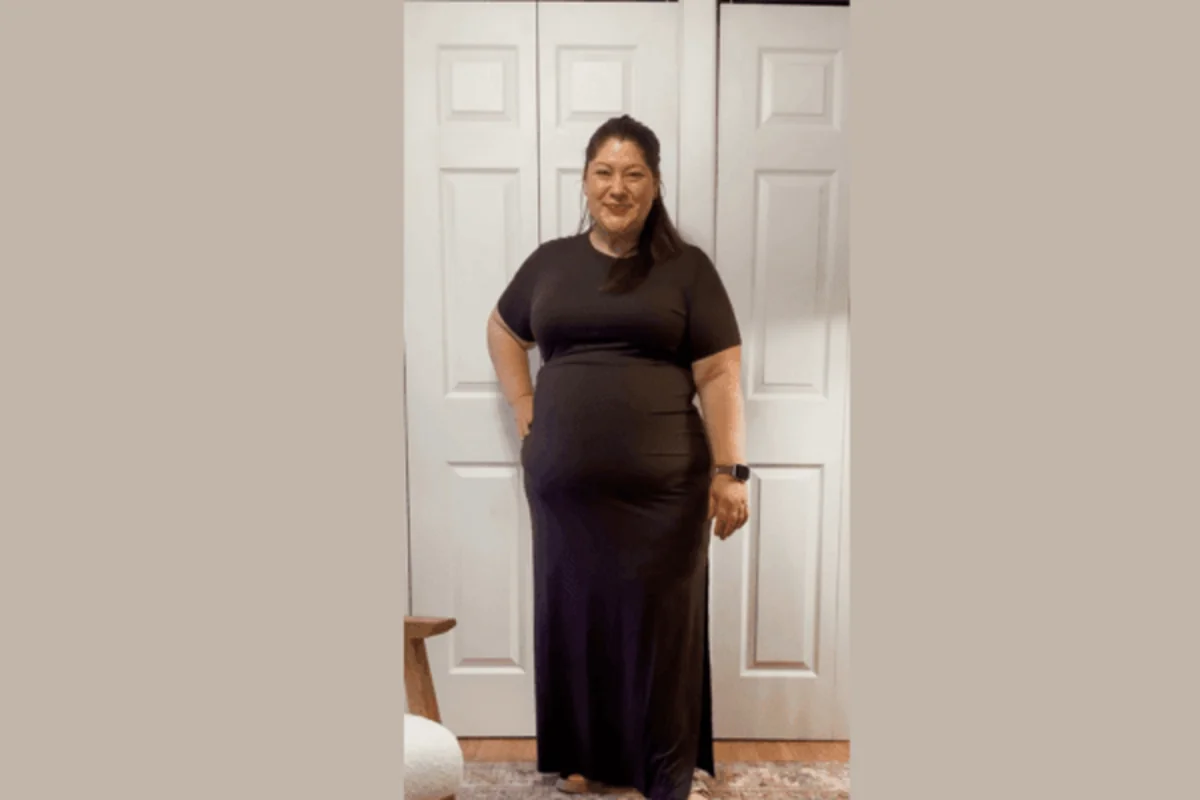
Quick answer: Losing weight after 40 is harder, but it is not impossible. What worked for me was simple: a small calorie deficit, lots of protein and fiber, walking every day, lifting weights 2 to 3 times a week, and working on the emotional side of eating. That’s how I lost 200 pounds in midlife. Here’s exactly what I did.
If you’re over 40 and wondering if real, lasting weight loss is still possible for you… I’m here to tell you: YES. IT. IS.
My highest weight was 431 pounds.
As of September 2026, I’m down 200 pounds.
I did it in my 40s, with a full-time job, a lot of stress, and plenty of mistakes.
I’m Jax: podcaster, content creator, and a certified life and wellness coach for women over 40. I’m not a doctor. I’m a woman who did this the long way, out loud, so you can see it’s possible too.
No quick fixes. No perfection. Just the real stuff that worked.
Let’s get into it.
A note on PCOS and perimenopause: I have both, and I lost this weight anyway. It’s harder, and I needed help from professionals along the way. But it’s possible. Always talk to your own doctor about what’s right for your body.
Losing weight after 40 is harder because your body is changing. You’re not doing it wrong.
Here’s what’s going on:
The good news? Every one of these has a fix. That’s what the rest of this post is about.
Because it’s rarely just about food. For most of us, it’s about feelings, habits, and a world that makes overeating easy.
Seeing this changed everything for me. I stopped thinking “I have no willpower” and started asking “What do I actually need right now?”
Try this: When a craving hits and you’re not truly hungry, swap the food for what you really need:
For more on this, read Reclaiming Control Over Emotional Eating.
Eat a little less than your body burns, and build most of your meals around protein, fiber, and whole foods. Here’s how I did it.
Let’s keep it real. To lose weight, you have to burn more calories than you eat. That’s true at any age.
But after 40, how you do it matters. I eat just a little under my maintenance calories. That way I still have energy, I still feel full, and I protect my muscle.
Why it works over 40:
Counting calories helped. Tracking macros changed the game.
Macros are the three main parts of food: protein, carbs, and fat. I aim for high protein, some carbs (mostly the slow kind, like oats and beans), and healthy fats like avocado and olive oil.
Why it works over 40:
Fiber is my hidden hero. I get 25 to 30 grams a day from veggies, fruit, beans, oats, chia seeds, and flax.
Women 31 to 50 need about 25 grams a day. But only about 5% of adults actually get enough, according to Cleveland Clinic.
Why it works over 40:
I swapped most of the packaged, processed food for real food. Think salmon, chicken, eggs, leafy greens, berries, beans, avocado, and olive oil.
I’m not perfect. I just pick more foods that fuel me and fewer that drain me.
Why it works over 40:
This one sounds small. It wasn’t.
I cut soda completely. I switched to black coffee with no cream and no sugar. And I drink 80 to 100 ounces of water a day.
Why it works over 40:
Make healthy choices easy and automatic, so you don’t need willpower every day. These three habits did that for me.
I use MyFitnessPal to log my meals, snacks, and water. It keeps me honest without guilt.
It’s a tool, not a punishment.
Why it works over 40:
Sundays became sacred for me. I cook proteins, chop veggies, and pack easy grab-and-go meals for the week.
Meal prep saved me from so many drive-thru regrets.
Why it works over 40:
Midlife comes with big feelings. Career pressure. Caregiving stress. Loneliness. Perimenopause mood swings.
I started journaling and pausing before I ate. I’d ask myself one question:
“Am I actually hungry, or am I anxious, sad, or bored?”
Why it works over 40:
Want to go deeper? Read The Mindset Practices That Are Actually Making Me Lose Weight in My 40s.
For me, it was daily walking plus strength training 2 to 3 times a week. That matches the CDC’s guidelines for adults: at least 150 minutes a week of activity like brisk walking, plus 2 days of muscle strengthening.
Walking is my soulmate movement. I aim for 8,000 to 10,000 steps on workdays and 12,000 or more on weekends.
It’s gentle. It’s free. And it works.
Why it works over 40:
Want the full story? Read How Walking Changed My Life.
Lifting weights isn’t just for bodybuilders. I started slow with resistance bands and bodyweight moves. Then I built up to 2 to 3 sessions a week.
It changed my shape, my confidence, and my ability to keep the weight off.
Why it works over 40:
NEAT stands for “non-exercise activity thermogenesis.” That’s a fancy name for all the moving you do that isn’t a workout.
Vacuuming. Pacing on phone calls. Doing laundry. Walking while listening to a podcast. It all counts.
Why it works over 40:
They helped me for a short time, alongside my habits. They were never the whole plan. Always talk to your doctor before starting any medication.
I used Zepbound (tirzepatide) for 4 months. It quieted the “food noise” in my head so I could focus on building habits.
Why it helped me:
Know this: muscle loss is a real risk on GLP-1 medications. Mayo Clinic notes that about 25% to 40% of the weight lost on them may come from lean mass, like muscle. That’s why protein and strength training matter even more if you use one.
Early on, I used phentermine for about 2 months. It gave me a boost when I felt stuck and overwhelmed at the start.
It helped me build momentum. It was never meant to be forever.
Why it helped me:
✅ Highest weight: 431 pounds
✅ Total lost: 200 pounds (as of September 23, 2026)
✅ Meds: phentermine (about 2 months), Zepbound (4 months)
✅ Challenges: depression, perimenopause, emotional eating
✅ Wins: lower blood pressure, better labs, glowing skin, better sleep, more confidence, and deeper self-trust
Aim to get 1% better every day, and let simple systems do the heavy lifting. A goal without a system is just a wish.
Here’s the rhythm that keeps me on track:
Every day:
Every week:
Every month:
Want my full list of the daily and weekly habits I use? I put it all in one place in my Weight Loss Cheat Sheet.
Start small. Pick one or two easy habits and build from there. Here’s a simple first week:
Small steps.
Every day.
That’s the whole secret.
Wondering why so many plans fall apart after 40? Read Why Weight Loss Programs Fail Women Over 40.
It depends on how much you want to lose. A healthy pace is about 1 to 2 pounds a week, and the CDC says people who lose weight at that steady pace are more likely to keep it off. For a big goal like mine, give yourself time. Mine took years.
Yes. Medication helped me for about 6 months in total. Everything else came from daily habits: a calorie deficit, protein, fiber, walking, and strength training.
The best diet is one you can stick with. Build your meals around protein, fiber, veggies, fruit, and healthy fats, and eat a little less than your body burns. You don’t have to cut out whole food groups.
Start where you are, even if that’s 2,000 steps, and add a little each week. I aim for 8,000 to 10,000 on workdays. Research shows big health benefits starting around 7,000 steps a day.
No. I lost most of my weight in my mid to late 40s. It’s not too late. You’re not behind. You’re awake.
Yes. I have PCOS and perimenopause, and I lost 200 pounds in my 40s. It takes patience, a plan built around protein, fiber, walking, and strength training, and support from your doctor.
Many of us learned to use food to calm stress, sadness, or boredom, and overeating is normal in our culture. Noticing your triggers, pausing before you eat, and swapping in a non-food comfort, like a walk or a call, helps break the habit.
If you’re a woman over 40 and you feel stuck, please hear me:
You are not broken.
You are not too far gone.
You are not too late.
Your glow-up doesn’t have to look like mine. But I hope my story shows you that real change is possible, with grace, support, and a real plan.
This isn’t about shrinking yourself. It’s about showing up fully, with energy, joy, and confidence.
Ready for your next step? Take the free Glow Assessment to see where to start. Or if you want a plan built just for you, check out the 6-Week Strategy Session.
With love and confidence,
Jax
This post shares my personal experience and is not medical advice. Always talk to your doctor before starting a new diet, exercise plan, or medication.