

By Jax Stys, certified life coach · Last updated: September 27, 2026
Quick answer: What daily habits help with weight loss after 40? For me, it’s simple, repeatable ones: meal prep once a week, learn the difference between hunger and cravings, walk at least 45 minutes a day, strength train 3 times a week, eat slowly, and track what I eat. None of them are fancy. Done together, day after day, they move the scale.
My walking started with one block, at 6 a.m., because I was too self-conscious to go to a gym.
My highest weight was 431 pounds. As of September 2026, I’m down 200 pounds. These daily habits are a big part of how I kept going.
I’ll be honest with you about one more thing. Habits weren’t my only tool. As of September 2026, I’ve also used Zepbound for 4 months and phentermine for about 2 months early on, with my doctor’s guidance. Always talk to your doctor first. Medicine or not, these habits are what I do every single day.
If you read Part One of this series, you know we spent that whole post on mindset, the inner work that has to happen first.
Today is Part Two. This is where we get into the physical, daily, body-level habits. The practical things I do every day that are working.
Here are 15 practices. They’re personal to me, and some of them, especially around eating schedules, may not be right for everyone. Listen to your body, know your own health history, and talk to your doctor before making big changes to how you eat.
Take what fits. Leave what doesn’t. Which two would be easiest for you to start?
The 15 habits at a glance:
It can help some women, but it isn’t for everyone, so talk to your doctor first. I follow an intermittent fasting approach that works for my specific health needs and goals. Most days I eat within a set window and fast outside of it. Twice a week I make the fasting period longer.
What I’ve noticed: it made my relationship with food simpler. Instead of thinking about eating all day, I only focus on food during my window. It also helped me get curious about what real physical hunger feels like, separate from habit, boredom, or routine.
This is my personal plan, shaped by my own health. Fasting is not right for everyone. If you’re curious about it, have a real conversation with your doctor before you start.
Simple, repeat meals make it easy to know exactly what you’re eating. I meal prep once a week, and I keep my meals simple. On purpose.
I’m not making gourmet recipes or trying to keep things exciting. I have a small rotation of meals that are easy to make and easy to track:
• Grilled chicken with rice and vegetables
• Salmon with sweet potato
• Ground turkey with salad
• Eggs and Greek yogurt
• Simple protein snack boxes
Here’s why simple matters: when your meals are complicated and different every time, tracking gets hard. You start guessing. When your meals are simple and consistent, you know exactly what you’re eating.
Boring meals are underrated during a weight loss season. Save the kitchen adventures for later.
Try this: Pick 3 meals you already like. Make them your rotation for the next 2 weeks.
Pause and name it: is this hunger, a desire, or a craving? This one changed everything about how I relate to food.
Most of us use the word “hungry” for a lot of feelings that aren’t the same thing at all.
• Hunger is a real body signal. Your stomach is empty. Your energy is dipping. Your body needs fuel.
• A desire starts in your head. You see or smell something good and think, “I want that.” But your body doesn’t need fuel.
• A craving is tied to a feeling. Stress. Boredom. Needing comfort.
I keep a simple chart in my notes app or a notebook. When I feel the urge to eat, I write down the time, what I feel in my body, and a label: hunger, desire, or craving?
Just pausing to label it has helped me more than almost anything else on this list. Once you name what’s really happening, you can choose what to do instead of reacting on autopilot. (Want to go deeper? Read my post on why we overeat and how to stop.)
Make your wins something you can see. Every time I make a choice that matches my goals, especially when part of me didn’t want to, I celebrate it.
I use a bead jar. Every win earns a bead. I can watch them pile up. Every bead is a real moment when I chose my health over an impulse.
This works because one of the biggest things that derails us is the story we tell ourselves: “I can’t do this.” The bead jar is proof that story is wrong.
Use whatever makes your wins visible. A tally in a journal. Stickers on a calendar. A list in your notes app. Collect your own evidence, and let it build a new story.
Have a list of things to do instead, ready before the craving shows up. When I notice a craving or desire, not real hunger, I need something else to do. If I don’t have an answer ready, the urge usually wins.
So I made my list ahead of time:
• Take a walk
• Call a friend
• Do my skincare
• Read
• Journal
• Tidy one small space
• Stretch
Cravings peak. They feel intense for a few minutes, then they start to fade. If you can ride that wave without acting on it, it passes. The distraction chart is how you ride the wave. I share a free printable version with my podcast episode on this.
NEAT means all the movement you do that isn’t a workout. It stands for non-exercise activity thermogenesis: walking to your car, taking the stairs, standing, doing dishes, cleaning, gardening.
It adds up more than you’d think. Dr. James Levine of Mayo Clinic, who studies NEAT, says it can vary between two people of similar size by up to 2,000 calories a day (Harvard Health).
Here’s how I add more NEAT:
• I park farther away.
• I take walking breaks at work.
• I stand when I can.
• I take calls while walking.
• I take the longer route.
No gym needed. No special time slot. Just more moving, all day.
Remove one step between you and your workout. This one is small, and I love it. I sleep in the workout clothes I’ll move in the next morning. When the alarm goes off, I’m already dressed. One less step. One less reason to talk myself out of it.
When you make the healthy choice even a little easier, you do it more often.
Try this: Lay out (or wear!) tomorrow’s workout clothes tonight.
If it’s not in the house, the decision is already made. When I started, I cleared out my pantry, fridge, and freezer. I removed everything that wasn’t on my plan and made space only for the food I wanted to be eating.
Willpower runs out. Every time you see something off-plan and say no, you use a little of it. Do that enough times in one day and you’re running on empty.
I do this at work too. Our break room always has snacks sitting out. I simply stay away from it. Out of sight really is out of mind.
Yes, it can help you feel full on less food. Eating slowly gives your body’s fullness signals time to reach your brain. Harvard Health explains that when we eat too fast, those signals don’t have enough time to work.
My mindful eating rules:
• I always sit down to eat.
• I eat slowly.
• I put my fork down between bites.
• I chew well.
• No phone or TV at meals.
Most of us eat too fast and only realize we overate afterward. Slowing down is one of the simplest tools there is.
It’s a Japanese saying that means eat until you’re about 80 percent full. Not stuffed. Not uncomfortable. Just satisfied.
About halfway through a meal, I check in with myself: how full am I? I aim to stop at that comfortable, satisfied feeling, not the heavy, sleepy kind of full.
Pair this with eating slowly, and within a week or two it starts to feel normal.
At least for a few weeks, yes. This one takes real honesty, because before I started, I wasn’t as accurate about how much I was eating as I thought.
I tracked my food for the first few weeks to get a true picture. It was eye-opening. Portions I thought were normal were bigger than the serving on the label. Foods I thought were simple had more in them than I realized.
Tracking doesn’t have to be forever. But until you really know what your portions look like, being honest about what you’re eating is a powerful step.
Daily weigh-ins work for me, but they’re not for everyone. I weigh myself every morning, same time, same conditions, and I write it down. I also take full body measurements once a week.
Weighing daily taught me to see normal ups and downs for what they are: shifts from water, digestion, hormones, and sleep. The trend over time tells the real story.
Measurements matter because some weeks the scale barely moves while your inches quietly go down. Both numbers together give a much fuller picture.
One note: if daily weighing makes you anxious instead of informed, weigh in once a week, or focus on measurements and how your clothes fit. That’s a healthier choice for some women.
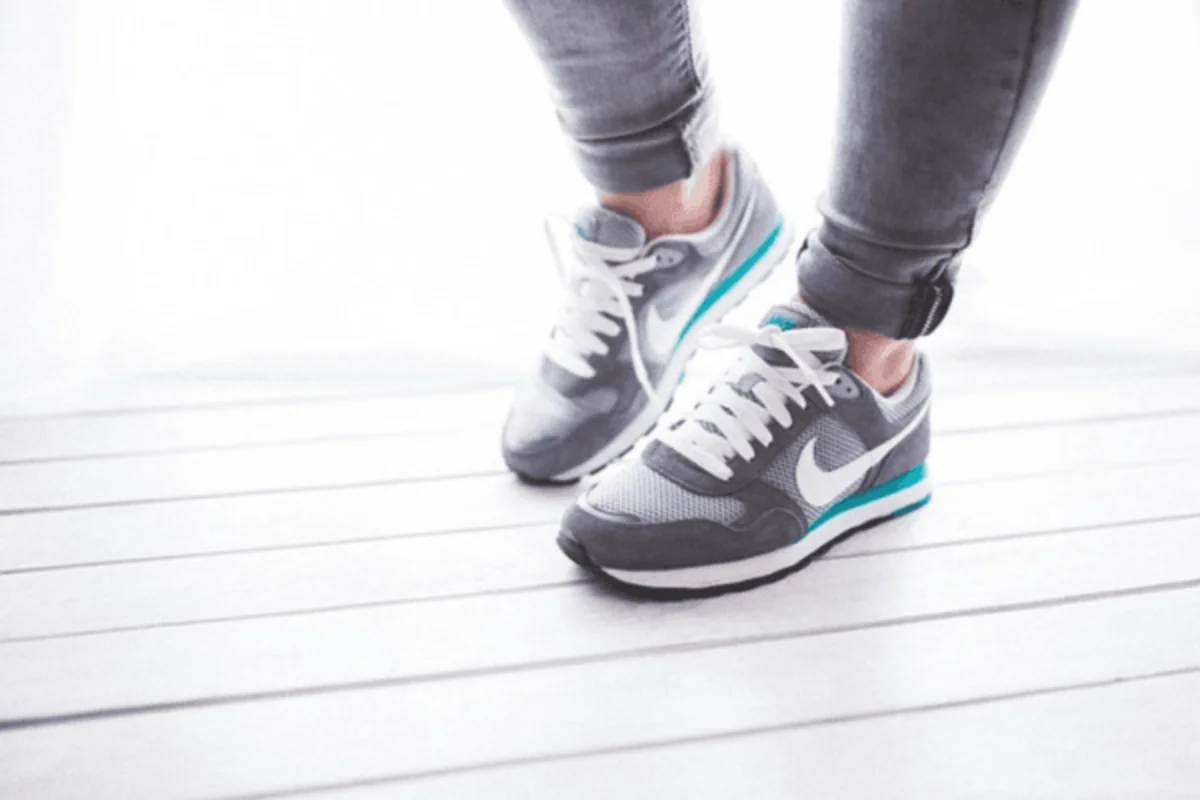
My goal is at least 45 minutes of walking every day, and it doesn’t have to happen all at once. This one is close to my heart. Walking was one of the first things I committed to, starting with one block, and I haven’t stopped.
Most days I walk 30 minutes in the morning. Outside when the weather cooperates, and here in Cleveland that’s not always a guarantee. There’s something about morning sunshine and fresh air that sets the tone for the whole day.
Then I take a 15-minute walk after lunch or dinner. It’s shorter, but don’t underestimate it. A walk after a meal helps your blood sugar and digestion.
Sometimes I listen to a podcast or an audiobook. Sometimes I call a friend and we talk while we both walk. Those are some of my favorite conversations. And sometimes I do nothing at all. Those walks are often the most restful of all.
For step goals and the research behind them, read How Many Steps a Day to Lose Weight? How Walking Changed My Life After 40.
No. Most of my strength training happens right at home. If walking is the steady heartbeat of my routine, strength training is the muscle. Literally.
The CDC recommends muscle-strengthening activity at least 2 days a week for adults. I aim for 3.
A lot of women picture strength training as a big, scary gym and a 90-minute workout. It doesn’t have to be any of that. I use dumbbells, kettlebells, and my own bodyweight: squats, lunges, hip hinges, rows, presses, and carries. These moves build real-life strength and support your body for the long haul.
I also just signed back up at the gym, and I’m excited about it. My plan is to go once or twice a week when I have more time and want a change of scenery.
But the gym is a bonus for me right now, not a must. My home workouts count just as much. A set of adjustable dumbbells, a kettlebell, and your own body will take you really far.
Because everything else in your life works better when you feel good. This last one makes all the others possible.
Put your wellness at the top of your list. First. Not after everything else is done. Not when you have a free moment. First.
When your energy, focus, mood, and strength are good, you show up better for the people you love. You do better work. You have more to give.
With a full-time job and helping care for my dad, putting my wellness first takes planning. That’s why I schedule it.
These are some favorites from my old “100 Weight Loss Secrets” list that still earn their spot:
• Protein at every meal. It keeps me full and helps protect my muscle.
• Fiber every day. Mayo Clinic recommends about 25 grams a day for women 50 and younger and 21 grams for women 51 and older. High-fiber foods are more filling, so you tend to eat less.
• Swap soda for sparkling water or tea.
• Drink a glass of water before meals.
• Protect your sleep. The CDC recommends at least 7 hours a night for adults. Put screens away an hour before bed.
• Set a caffeine cutoff. Mine is 2 p.m.
• Take the stairs. It adds up.
• Stretch daily. Your joints will thank you.
• Take progress photos and celebrate non-scale wins. Looser jeans count.
• Work in 12-week sprints. Here’s my 12-Week Goal System.
• Get your hormones and thyroid checked. Here’s how to talk to your doctor about perimenopause.
Want a simple place to start? Get my 10 free mini guides for women 40+, including my Beginner Walking Guide and GlowGetter Grocery Guide.
You might also like: how I’m managing perimenopause brain fog.
Simple habits you can repeat every day work best. Mine include meal prep once a week, telling hunger apart from cravings, walking at least 45 minutes a day, strength training 3 times a week, eating slowly, and tracking my food. Start with two or three and build from there.
Real hunger is a body signal: an empty stomach and low energy. A craving is usually tied to a feeling like stress or boredom. When you feel the urge to eat, pause and label it. That short pause helps you choose instead of reacting.
No. The CDC recommends muscle-strengthening activity at least 2 days a week, and you can do it at home. Dumbbells, a kettlebell, and bodyweight moves like squats, lunges, and rows work well.
No. These daily habits do the everyday work, and as of September 2026 I’ve also used Zepbound for 4 months and phentermine for about 2 months early on, with my doctor’s guidance. Always talk to your doctor before starting any medication.
Daily weigh-ins help some women see the trend over time instead of reacting to one number. If it makes you anxious, weigh in once a week or track measurements and how your clothes fit instead.
Pick one. Do it every day this week. Then add another. That’s really all I did, starting with one block.
Which of these 15 habits is speaking to you most right now? Tell me in the comments. And if you want help building your own plan, take the free Glow Assessment.
With love and confidence,
Jax
Sources
This post shares my personal experience and is not medical advice. Always talk to your doctor before changing how you eat, starting a new exercise plan, or taking any medication.