





My Philosophy







Tune in to ‘The Midlife GlowGetter’ for midlife conversations with Jax including wellness & weight loss tips, mindset practices, financial growth concepts and inspiring travel with glow-up lifestyle ideas. To help you thrive, glow, and embrace your best chapter in midlife.
Listen to Current Episode
Enjoyed this episode? Leave a review!
If you leave a positive review, screen-shot it, DM or Email it to me and I will respond with 10 free mini guides just for your support!
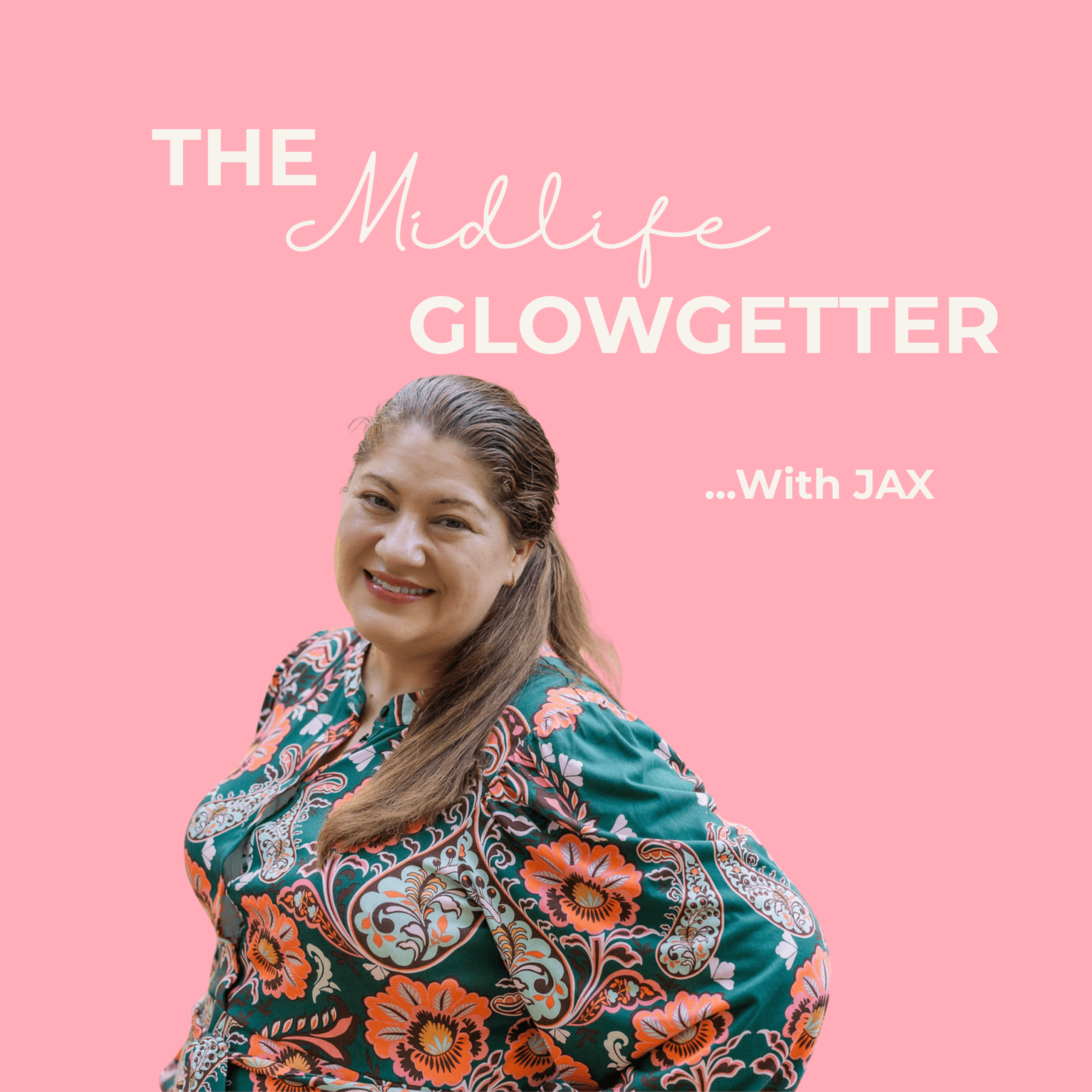

Age 49, Down 200 lbs naturally.
90 more pounds to loose.
My early 6am Saturday morning routine including stretching, strength training, quick breakfast and walking.
Wake 5am
Hydrate
Wash Face
Brush Teeth
Check Emails
Dress
Stretch
Vibration Plate
Gym 6am
Weight Machines
Sauna
Breakfast-Cold Brew Black & Egg Bites
Home
News
Walk Outside
Then 8am ready for the day 👟♥️😘
Come follow and join the party for real life midlife motivation and inspiration in wellness, weight loss, mindset and lifestyle.
Soon to come a midlife women`s glow-up online community and glow-up retreats in Charleston SC.
Podcast - The Midlife Glowgetter
Website: www.jaxstys.com
Free Newsletter & Guides in link in bio.
Soon to come glowgetter retreats in SC & CO.
Oh and remember it is never too late to create a life and lifestyle you love.
Live a life you’d want to live twice.
Love, Jax
#womenover40
#midlifereinvention
#weightlossjourney
#transformyourlife
#midlifewomen

I have lost 200 lbs naturally.
I have obtained a new corporate position make $35k more per year in project management and this is what I`m implementing at my in person job for wellness, longevity and weight loss.
✅ stand-up desk
✅ elliptical under the desk
I am going to search for a stand-up desk on facebook marketplace to save money. I am going to get a life pro elliptical from Amazon.
Hope this helps anyone looking to improve their health while having a sedentary job.
I have another 90 lbs to lose and hopefully this will help some to get me there.
Follow me for real life midlife, women over 40 motivation and inspiration in wellness, weight loss, mindset and lifestyle.
Podcast - The Midlife Glowgetter
Website: www.jaxstys.com
Free Newsletter & Guides in link in bio.
Soon to come glowgetter retreats in SC & CO.
Oh and remember it is never too late to create a life and lifestyle you love.
Live a life you’d want to live twice.
Love, Jax
#womenover40
#midlifereinvention
#wellnessjourney
#healthylifestyle
#midlifewomen
Please answer the poll, I need your help.
If you could create your dream life in midlife what would you focus on the most?
Age 49, Down 200 lbs naturally, paid down $45k in debt, new career in project management, life coach certified. This is by far my best, highest and most productive season of my life.
Midlife-My best season yet...
Come follow and join the party for real life motivation and inspiration in wellness, weight loss, mindset and lifestyle.
Soon to come a midlife women`s glow-up online community and glow-up retreats in Charleston SC.
Podcast - The Midlife Glowgetter
Website: www.jaxstys.com
Free Newsletter & Guides in link in bio.
Soon to come glowgetter retreats in SC & CO.
Oh and remember it is never too late to create a life and lifestyle you love.
Live a life you’d want to live twice.
Love, Jax
#womenover40
#midlifereinvention
#weightlossjourney
#healthylifestyle
#midlifewomen
Age 49, Down 200 lbs naturally, paid down $45k in debt, new career in project management, life coach certified. This is by far my best, highest and most productive season of my life.
Midlife-My best season yet...
Come follow and join the party for real life motivation and inspiration in wellness, weight loss, mindset and lifestyle.
Soon to come a midlife women`s glow-up online community and glow-up retreats in Charleston SC.
Podcast - The Midlife Glowgetter
Website: www.jaxstys.com
Free Newsletter & Guides in link in bio.
Soon to come glowgetter retreats in SC & CO.
Oh and remember it is never too late to create a life and lifestyle you love.
Live a life you’d want to live twice.
Love, Jax
#womenover40
#midlifereinvention
#glowupafter40
#transformyourlife
#midlifewomen
Starting to plan a trip solo to Charleston SC in January or February.
Flying this time.
Now is my time and I`m going to make each moment count.
Follow me for real life motivation and inspiration in wellness, weight loss, mindset and lifestyle.
I hope you have an amazing day today and I look forward to meeting you in my future community, retreats or here online in the comments.
Podcast - The Midlife Glowgetter
Website: www.jaxstys.com
Free Newsletter & Guides in link in bio.
Soon to come glowgetter retreats in SC & CO.
Oh and remember it is never too late to create a life and lifestyle you love.
Live a life you’d want to live twice.
Love, Jax
#womenover40
#midlifereinvention
#glowupafter40
#transformyourlife
#midlifewomen
Midlife awakening and midlife reinvention I a real thing.
I did not have a midlife crisis…I had a midlife glow-up.
I have lost nearly 200 lbs mostly naturally.
I have paid off over $45K in debt as a single mom, single income household with a son away in college.
I have obtained a new corporate position make $35k more per year.
I have become a certified life coach by The Life Coach School.
All of these milestones the last 4 years have completely upgraded my confidence and mindset and growth as a woman over 40.
I feel like I have really come to my own and created my dream life. I am still working and creating my dream life everyday.
I have another 90 more pounds to loose. I want to work on certifications for my career and here online. Nutrition and Wellness Certifications I am working on with NASM. I want to become a Master Certified Life Coach.
I want to continue to help women over 40 all over the world to create the life of their dreams with support and a strong community. I want to create a monthly paid online community and app and in-person midlife glow-up retreats. I want to reach more women on my free podcast and free weekly newsletter.
I want to help you, my friend.
Follow me for real life motivation and inspiration in wellness, weight loss, mindset and lifestyle.
I hope you have an amazing day today and I look forward to meeting you in my future community, retreats or here online in the comments.
Podcast - The Midlife Glowgetter
Website: www.jaxstys.com
Free Newsletter & Guides in link in bio.
Soon to come glowgetter retreats in SC & CO.
Oh and remember it is never too late to create a life and lifestyle you love.
Live a life you’d want to live twice.
Love, Jax
#womenover40
#midlifereinvention
#glowupafter40
#transformyourlife
#midlifewomen
I lost 198 lbs in the last 4 years naturally as a single mom, working full time in corporate finance.
I was on weight loss medication for 3 months, got off it because of cost and side effects.
I have anther 90 lbs to go to reach my goal weight.
Back at the gym after 3 months off.
Hope this helps someone move their body today.
Follow for midlife wellness, lifestyle, & mindset inspiration and motivation.
Love, Jax
#midlifewellness #weightlossjourney #womenover40 #healthylifestyle #midlifereinvention
I lost 198 lbs in the last 4 years naturally as a single mom, working full time in corporate finance.
I was on weight loss medication for 3 months, got off it because of cost and side effects.
I have anther 90 lbs to go to reach my goal weight.
This is my meal plan for 9/14-9/18.
Hope this helps..
Follow for midlife wellness, lifestyle, & mindset inspiration and motivation.
Love, Jax
#midlifewellness #weightlossjourney #womenover40 #healthylifestyle #midlifereinvention
Your subconscious mind is always listening. Every thought you repeat becomes a belief. Every belief becomes your reality. If you keep focusing on what`s missing, the bank account, the age, the excuses, that`s exactly what you`ll keep creating more of.
These were my early morning thoughts this morning on my sunrise walk in the Metroparks here near Cleveland Ohio.
I hope you have an amazing day today.
Podcast - The Midlife Glowgetter
Website: www.jaxstys.com
Free Newsletter & Guides in link in bio.
Soon to come glowgetter retreats in SC & CO.
Follow to get inspired to transform and reinvent into the woman of your dreams.
It is never too late!
Love, Jax
#womenover40
#midlifereinvention
#glowupafter40
#transformyourlife
#midlifewomen
I lost 200 lbs in the last 4 years naturally as a single mom, working full time in corporate finance.
I was on weight loss medication for 3 months, got off it because of cost and side effects.
I have anther 80 lbs to go to reach my goal weight.
My supplements I take:
Loam Fiber Powder, Electroytes (sugar free), Pearl Powder in Water with Ice.
Lifecykel Mushroom Oils in black expresso
Vitamin D3K2
Omega 3
Fatty 15
NMN
Floraster Probiotic
Today’s Food
Breakfast: Homemade Protein Bars (27g protein, 12g finer, 6g sugar)
Lunch: Chipotle Chicken (Costco), cilantro lime cauliflower rice
Dinner: Factor Meal with Fresh Blueberries
Movement Today:
4:30am
Stretching
Vibration Plate
Arm-Dumbbells
Squats
Lunges
Disstastis Recti
Walk 35 min. (Japanese Style)
12:30pm After Lucnh
Walk 20 min. (Japanese Style)
6pm After Dinner
Walk 20 min. (Japanese Style)
8pm
Thigh Master 20 min. while reading/watching tv
Follow for midlife wellness, lifestyle, & mindset inspiration and motivation.
Love, Jax
#midlifewellness #weightlossjourney #womenover40 #healthylifestyle #midlifereinvention
I lost 200 lbs in the last 4 years naturally as a single mom, working full time in corporate finance.
I was on weight loss medication for 3 months, got off it because of cost and side effects.
I have anther 80 lbs to go to reach my goal weight.
My supplements I take:
Loam Fiber Powder, Electroytes (sugar free), Pearl Powder in Water with Ice.
Lifecykel Mushroom Oils in black expresso
Vitamin D3K2
Omega 3
Fatty 15
NMN
Floraster Probiotic
Today’s Food
Breakfast: Homemade Protein Bars (27g protein, 12g finer, 6g sugar)
Lunch: Chipotle Chicken (Costco), cilantro lime cauliflower rice
Dinner: Factor Meal with Fresh Blueberries
Movement Today:
4:30am
Stretching
Vibration Plate
Arm-Dumbbells
Squats
Lunges
Walk 35 min. (Japanese Style)
12:30pm After Lucnh
Walk 20 min. (Japanese Style)
6pm After Dinner
Walk 20 min. (Japanese Style)
8pm
Thigh Master 20 min. while reading/watching tv
Follow for midlife wellness, lifestyle, & mindset inspiration and motivation.
Love, Jax
#midlifewellness #weightlossjourney #womenover40 #healthylifestyle #midlifereinvention
I lost 200 lbs in the last 4 years naturally as a single mom, working full time in corporate finance.
I was on Zepbound for 3 months, got off it because of cost and side effects.
I have anther 80 lbs to go to reach my goal weight.
My supplements I take:
Loam Fiber Powder, Electroytes (sugar free), Pearl Powder in Water with Ice.
Lifecykel Mushroom Oils in black expresso
Vitamin D3K2
Omega 3
Fatty 15
NMN
Probiotic/Prebiotic
Today’s Food
Breakfast: Homemade Protein Bars (27g protein, 12g finer, 6g sugar)
Lunch: Chipotle Chicken (Costco), cilantro lime cauliflower rice
Dinner: Factor Meal with Asparagus
Movement Today:
4:30am
Stretching
Vibration Plate
Arm-Dumbbells
Squats
Lunges
Walk 35 min. (Japanese Style)
12:30pm
Walk 20 min. (Japanese Style)
6pm
Walk 20 min. (Japanese Style)
8pm
Thigh Master 20 min. while reading/watching tv
Follow for Midlife wellness, lifestyle, & mindset inspiration and motivation.
Love, Jax
#midlifewellness #weightlossjourney #womenover40 #healthylifestyle #midlifereinvention
High-protein breakfast bars that don’t taste like cardboard? Say less. 🍫✨
I’ve been perfecting these homemade protein bars for a long time and I’m finally sharing the recipe — 25g protein, 12g fiber, and 5g creatine per bar, made with clean ingredients like peanut butter, cashew butter, and no added sugar. Basically breakfast met dessert and they had a baby.
Perfect for busy mornings, post-workout fuel, or when you need a midlife-metabolism-friendly snack that actually keeps you full. No fancy equipment, no baking — just mix, press, chill, and go.
Follow me for more high protein recipes, gut health tips, and midlife wellness hacks (minus the boring stuff nobody asked for).
Comment “RECIPE” below and I’ll send you the full tecipe with all ingredient links! 💌
#womenover40 #CleanEatingRecipes #ProteinSnacks #MidlifeWellness #healthylifestyle
✨ Make Midlife Your Best Chapter!
Daily glow chat...
How I make midlife my best chapter yet.
Here are my tip for you:
Be more spontaneous 🎉
I am here to be a light in a season that can be looked at as stressful and lonely and depressing.
This should not be the case.
These tips are a field guide for the empty-nest, midlife, reinvention-ready woman.
🌸 Let`s glow in midlife together...
Love, Jax
#midlifewomen
#transformyourlife
#womenover40
#emptynest
#midlifejourney
✨ Make Midlife Your Best Chapter!
Daily glow chat...
How I make midlife my best chapter yet.
Here are my tip for you:
Redesign your home 🏡
I am here to be a light in a season that can be looked at as stressful and lonely and depressing.
This should not be the case.
These tips are a field guide for the empty-nest, midlife, reinvention-ready woman.
🌸 Let`s glow in midlife together...
Love, Jax
#midlifewomen
#transformyourlife
#womenover40
#emptynest
#midlifejourney
#travelandlifestyle #traveldiaries #midlifelifestyle #over40lifestyle #midlifetravel
I lost over 190 lbs, paid off $45K in debt, and completely rebuilt my life starting at 44, as a single mom, working full time in corporate finance.
…Why follow me
Real talk on health/weight loss after 40 that isn`t extreme or unsustainable
Money and debt payoff strategies that work on a real income, not a trust fund
Mindset and self-development tools from actual coaching training, not just platitudes
A peek into real estate/investing as you build that path too
A little style, beauty, and confidence-building along the way
The podcast and newsletter (The Midlife GlowGetter) and blog as the deeper-dive home base - check out my link in bio.
Follow along — this is just the beginning of my best chapter, and I want you to have yours too.
Love, Jax
#midlifewomen
#transformyourlife
#womenover40
#emptynest
#midlifejourney
Make Midlife Your Best Chapter!
Daily glow chat...
How I make midlife my best chapter yet.
Here are my tip for you:
1 Guard your calendar 📆
I am here to be a light in a season that can be looked at as stressful and lonely and depressing.
This should not be the case.
These tips are a field guide for the empty-nest, midlife, reinvention-ready woman.
Let`s glow in midlife together...
Love, Jax
#midlifewomen
#transformyourlife
#womenover40
#emptynest
#midlifejourney
Down 199 lbs naturally in my 40’s.
Paid down $45k in debt.
This is how I transformed my midlife.
Now empty nester & single. I’m still not done. 80 more lbs to go. Want to create a community of like minded midlife women wanting to transform their life into the life of their dreams.
Podcast - The Midlife Glowgetter
Website: www.jaxstys.com
Free Newsletter & Guides in link in bio.
Soon to come glowgetter retreats in SC & CO.
Follow to get inspired to transform and reinvent into the woman of your dreams.
It is never too late!
Love, Jax
#womenover40
#midlifereinvention
#glowupafter40
#transformyourlife
#midlifewomen


